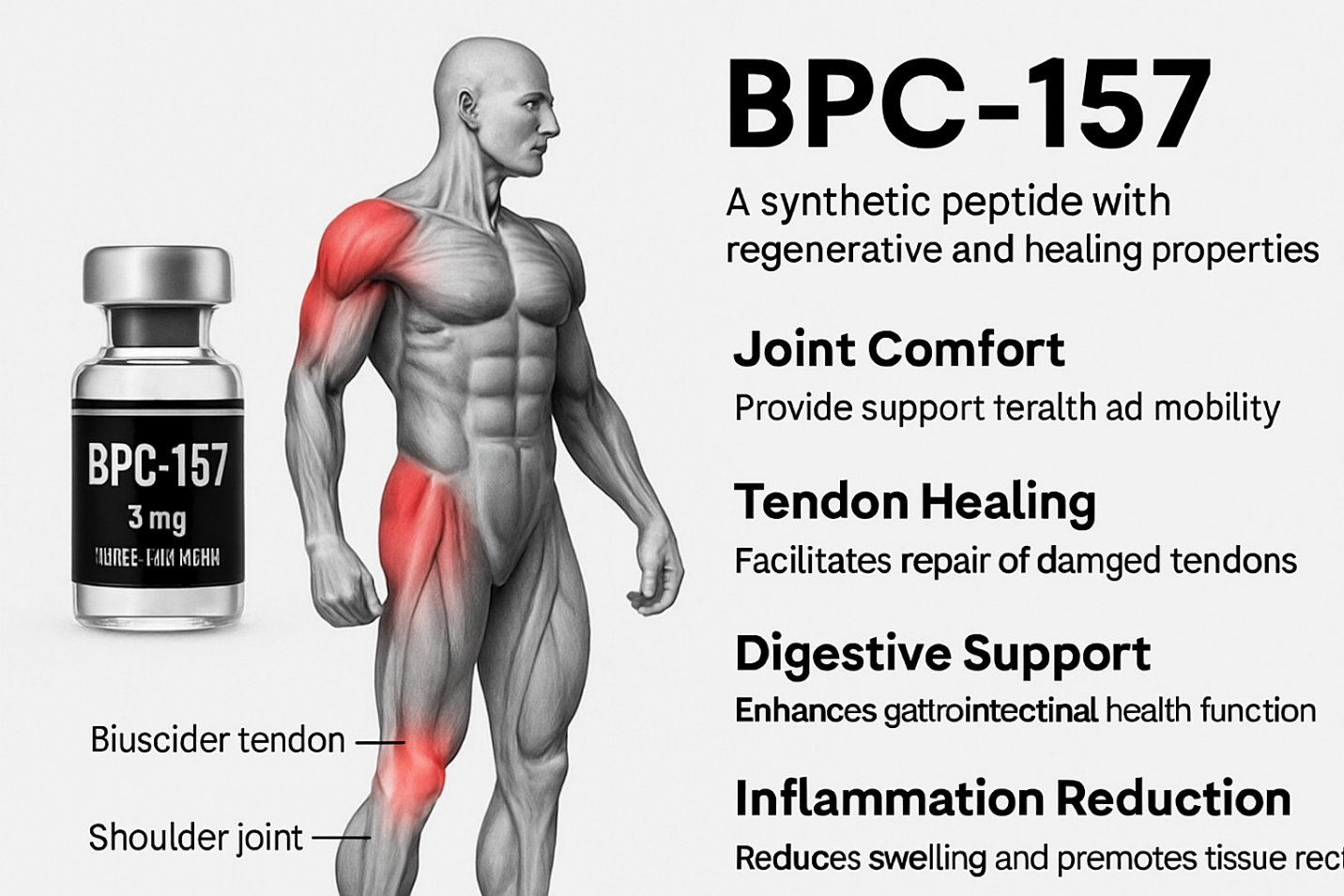
Modern training, high work demands and everyday stress all have one thing in common: they put pressure on our body’s ability to recover. Muscles, tendons, joints and even the digestive system can only take so much before discomfort, pain and reduced performance start to show. That is why more people are looking at regenerative peptides such as BPC-157 and exploring specialized peptide shops like https://bigboy-shop.com/product-category/peptide/bpc-157/ as a source of information and products.
BPC-157 has quickly moved from being a little-known research peptide to a staple topic in biohacking communities, athletic recovery discussions and conversations about chronic pain. It is not a painkiller, not a classic anti-inflammatory and not a hormone. Instead, it works as a signaling molecule that tells the body to repair, protect and rebuild damaged tissue.
In this in-depth guide, we will look at what BPC-157 is, how it is thought to work, why it has become so popular and what potential benefits and risks users should be aware of.
What Is BPC-157?
BPC-157 is short for Body Protective Compound-157. It is a synthetic peptide based on a segment found naturally in protective proteins in gastric juice. In simple terms, this means BPC-157 is inspired by a compound our body already knows and uses to protect the digestive tract.
Unlike many performance-oriented substances, BPC-157 is:
- Not a steroid
- Not an opioid or classic painkiller
- Not a hormone in the traditional sense
Instead, it belongs to a class of compounds that can influence the body’s own repair mechanisms. Rather than forcing a specific effect, BPC-157 appears to signal tissues to regenerate, grow new blood vessels and calm down excessive inflammation.
Because it acts at this more fundamental level, its potential impact is broad: from tendons and ligaments to gut lining, nerves and even mood.
How Does BPC-157 Work?
The exact mechanisms of BPC-157 are still being investigated, mainly in preclinical models such as animal and cell studies. However, several recurring themes have been observed:
1. Support for Wound Healing
In research models, BPC-157 has been shown to:
- Accelerate healing in hard-to-treat tissues such as tendons, ligaments and cartilage
- Encourage the growth of new blood vessels (angiogenesis), which improves nutrient and oxygen delivery
- Speed up closure of wounds and micro-tears
Tissues with poor blood supply, like tendons, often heal slowly. By improving blood flow in the injured area, BPC-157 may help the body move through the healing stages more efficiently.
2. Modulation of Inflammation
Inflammation is essential for repair, but chronic or excessive inflammation causes pain, stiffness and tissue breakdown. BPC-157 appears to:
- Reduce inflammatory markers
- Do so without suppressing cortisol or disrupting the adrenal glands
This combination is important. Traditional anti-inflammatory drugs (NSAIDs) can irritate the stomach, strain the kidneys and, with long-term use, may interfere with normal hormone balance. BPC-157 aims to support recovery without those common drawbacks, although long-term human data is still limited.
3. Protection of Organs and Tissues
In experimental settings, BPC-157 has shown the ability to protect organs from damage triggered by toxins, surgical procedures or oxidative stress. The liver, pancreas and gastrointestinal tract appear particularly responsive in preclinical studies.
4. Support for the Nervous System
There is also growing interest in BPC-157’s potential neuroprotective properties. It may support nerve regeneration, influence neurotransmitter systems such as dopamine and help the brain adapt to stress. This could partly explain why many users describe both physical and mental benefits.
Why Athletes, Biohackers and People with Chronic Pain Are Interested
At first glance, BPC-157 sounds like something reserved for research laboratories. Yet it is everyday problems that have driven its popularity:
- Repetitive strain injuries that never fully heal
- Tendonitis in the shoulder, knee, elbow or Achilles
- Persistent muscle pulls and micro-tears
- Long-term joint pain after sports or manual work
- Gut irritation linked to stress, diet or medication
Anyone who has tried to train through pain knows how limiting it can be when tissues do not quite recover between sessions. Over time, performance drops, motivation fades and the risk of more serious injury increases.
BPC-157 has gained a following because many users report that it seems to:
- Reduce nagging pain
- Improve mobility
- Shorten the “stuck in limbo” phase between injury and full recovery
Importantly, BPC-157 is not a magic fix. It works best when the basics are in place: good sleep, sensible training, appropriate rehabilitation exercises and a supportive diet. The peptide is seen as a tool that may help the body do what it is already trying to do—heal—just more effectively.
Key Effects and Expected Timeframes
While results vary between individuals, feedback from users and experimental data reveal several recurring patterns of benefit.
1. Tissue Repair in Tendons, Muscles and Cartilage
Many people turn to BPC-157 primarily for stubborn tendon problems:
- Tennis elbow
- Patellar tendonitis
- Achilles tendon issues
- Rotator cuff pain
- Hamstring strains
These injuries often linger because the blood flow around tendons is poor. BPC-157’s ability to promote new blood vessel formation may give these tissues a better chance to repair.
Typical reports include:
- Gradual reduction of pain over one to two weeks
- Increased range of motion
- More confidence when loading the affected joint
For cartilage and joint surfaces, users sometimes describe less stiffness after sitting or sleeping and improved comfort during training.
2. Support for the Gastrointestinal System
Because BPC-157 originates from a naturally occurring gastric peptide, it has a special affinity for the digestive tract. In preclinical research, it has shown promise in models of:
- Gastritis
- Ulcerative damage
- Leaky gut-like conditions
- Inflammatory bowel patterns
By strengthening the mucosal barrier and calming local inflammation, BPC-157 may help the gut lining maintain integrity. Some users notice:
- Less heartburn or stomach discomfort
- Reduced sensitivity to certain foods
- A calmer, more predictable digestion
This potential gut support is also one reason BPC-157 is interesting for people who use NSAIDs frequently and worry about stomach side effects.
3. Anti-Inflammatory Effects Without Cortisol Suppression
Traditional anti-inflammatory drugs work by blocking inflammatory pathways, but they can also:
- Irritate the stomach lining
- Affect kidney function
- Stress the adrenal system with long-term use
BPC-157 works differently. It does not appear to blunt cortisol or shut down the immune response. Instead, it seems to help the body resolve inflammation more efficiently by:
- Supporting microcirculation
- Protecting cells from oxidative stress
- Encouraging proper tissue remodeling
This makes it attractive for people with chronic low-grade inflammation who want support without the typical long-term medication burden.
4. Neurological and Cognitive Support
Beyond muscles and joints, some users notice surprising changes:
- Better stress tolerance
- More stable mood
- Sharper mental focus
Preclinical data suggests BPC-157 might help protect neurons and support recovery after various types of nervous system insult. Its interaction with dopamine signaling could be one mechanism behind these cognitive and mood effects.
While this area is still very speculative, it adds another dimension to why the peptide is being explored in longevity and biohacking circles.
5. General Endurance and Recovery
When circulation improves and tissues heal more efficiently, overall endurance often follows. Users sometimes report:
- Less post-workout soreness
- Faster bounce-back between sessions
- The ability to tolerate slightly higher training volumes
Again, this should not be mistaken for a stimulant or performance drug. The effect is more subtle: by improving the body’s repair capacity, BPC-157 may allow consistent training without constant setbacks.
Common Approaches to Use and Administration
Because BPC-157 is not yet an approved medication, there is no official dosing guideline. Instead, information circulating in the community is based on research models and anecdotal experience. Any consideration of use should therefore be discussed with a qualified healthcare professional.
That said, certain patterns are frequently mentioned:
Local Versus Systemic Goals
- Local injury (tendon, muscle, joint)
- Often addressed with subcutaneous injections near the affected area in experimental settings.
- The idea is to deliver the peptide directly where healing is needed most.
- Protocols typically run for a few weeks, with daily or near-daily administration.
- Systemic or long-term issues
- For more general support, some models use oral administration in liquid or capsule form.
- Because the peptide must survive digestion and first-pass metabolism, oral amounts are often higher than injection doses in study designs.
- Stomach and intestinal problems
- When the goal is gut support, oral intake on an empty stomach is usually favored in experimental scenarios to maximize contact with the gastric lining.
Course Length and Consistency
Across these different goals, several themes repeat:
- Short bursts of use, typically two to four weeks, are common starting points.
- For more stubborn issues, courses of up to six weeks are sometimes reported.
- Consistency appears more important than high doses. Regular daily administration is generally favored over sporadic use.
Again, these patterns reflect community practice and preclinical protocols rather than official medical recommendations. Anyone considering BPC-157 should understand that products are commonly sold for research purposes only, and long-term safety in humans is still being studied.
Safety, Side Effects and What We Know So Far
Whenever a compound influences fundamental processes like tissue repair and inflammation, safety should come first.
General Safety Profile
Available preclinical data suggests that BPC-157 has:
- Very low toxicity, even at relatively high doses in animal models
- No obvious negative effects on major organs
- No signs of hormonal disruption or behavioral addiction
In the dosage ranges most often discussed for research and performance recovery, users generally report good tolerance.
However, it is crucial to remember:
- Animal or cell studies do not automatically translate into long-term human safety.
- Absence of strong negative reports is not the same as proof that no risks exist.
- More rigorous human trials are required to fully understand the long-term profile.
Reported Side Effects
Although many people report no side effects, some do experience mild and usually temporary reactions, such as:
- Redness, itching or discomfort at the injection site
- Short-term fatigue or a feeling of “low energy” during the first days
- Increased appetite, especially when using oral forms
These signals show that the peptide is active and interacting with metabolic pathways. Anyone experiencing persistent or worrying symptoms should stop use and consult a healthcare provider.
Interactions and Combinations
BPC-157 is sometimes combined in experimental stacks with other peptides such as TB-500 or growth hormone–related fragments. The goal is often to create a synergistic effect on recovery.
While this may sound attractive, stacking substances also increases complexity and makes it harder to predict interactions. Without clear clinical data, combining multiple peptides should be approached with great caution and ideally under professional supervision.
Legal and Regulatory Considerations
The regulatory status of BPC-157 varies from country to country and is evolving. In many places, it is:
- Not approved as a prescription drug or over-the-counter medication
- Sold instead as a research chemical or peptide for laboratory use
- Not officially evaluated for safety, efficacy or manufacturing standards by national drug agencies
For example, in Sweden BPC-157 is not recognized as a medicine, yet it may be legally possessed for personal or research use. Other countries may classify it differently.
Because of this patchwork landscape, it is essential to:
- Check local regulations before ordering or using any peptide
- Choose reputable suppliers that prioritize purity and transparent lab testing
- Understand that buying and using research-grade compounds carries its own responsibilities
Who Might Consider Exploring BPC-157?
From the patterns described above, several groups often take interest in this peptide:
- Athletes and regular exercisers
People who train frequently and struggle with recurring tendon or muscle problems sometimes look to BPC-157 as a recovery aid. - Manual workers and active professionals
Those whose jobs rely on physical performance may be drawn to anything that could help them stay mobile and pain-free. - Individuals with chronic or post-surgical injuries
When traditional rest and rehabilitation have not fully resolved an issue, BPC-157 is sometimes considered as a complementary approach. - People with sensitive digestion
Given its gastric origins, BPC-157 appeals to individuals looking for gut lining support, especially if they have a history of irritation from medications or stress. - Biohackers and longevity enthusiasts
The possible neuroprotective and mood-supportive effects make the peptide interesting for people who view health from a systems and performance perspective.
In all cases, a careful risk–benefit assessment, medical consultation and respect for local laws are essential. BPC-157 is best approached as a research-grade tool, not as a casual supplement.
Practical Guidelines and Responsible Use
Although this article does not provide medical advice or personalized dosing, several responsible principles can guide anyone researching BPC-157:
- Start with lifestyle basics
Good sleep, nutrition, stress management and intelligent training should come first. Peptides are not a substitute for fundamentals. - Consult a knowledgeable professional
A practitioner familiar with peptides and regenerative medicine can help assess whether BPC-157 is appropriate in the first place. - Prioritize product quality
Look for suppliers that publish batch testing, purity analysis and clear labeling. Poor-quality peptides can undermine potential benefits and increase risk. - Use conservative protocols
Lower, research-backed dosage ranges and shorter course lengths are usually safer starting points than aggressive experimentation. - Monitor the body’s response
Keep track of pain levels, mobility, sleep, mood and digestion. Any unusual reaction is a signal to pause and seek guidance. - Avoid stacking too many compounds
Combining several experimental substances at once makes it almost impossible to know what is causing which effect or side effect.
Frequently Asked Questions About BPC-157
1. How quickly do people usually notice effects?
Some individuals report local improvements—such as reduced tendon pain or better joint mobility—within five to ten days. For systemic or digestive benefits, changes may take two to four weeks. The timeline depends on the severity of the issue, overall health and how consistently protocols are followed.
2. Is BPC-157 suitable for long-term continuous use?
Most community protocols favor defined courses of a few weeks rather than constant, year-round usage. Because long-term human research is limited, it is prudent to build in breaks and reassess regularly.
Can BPC-157 replace physiotherapy or rehabilitation exercises?
No. Even if it supports tissue repair, structural problems and movement patterns still need addressing. The best results usually come when peptide use is combined with tailored rehabilitation under guidance from physiotherapists or trainers.
Is it safe to self-inject BPC-157 at home?
Any injection carries risks, including infection and incorrect placement. Without correct training and sterile technique, complications are more likely. Anyone considering injectable routes should first seek professional instruction and weigh whether the potential benefit justifies the added risk.
Can I take BPC-157 alongside other medications or supplements?
Because of the limited clinical data, potential interactions are not fully mapped. It is vital to disclose all current medications and supplements to a healthcare provider before adding BPC-157 to the mix.
Is BPC-157 allowed in competitive sports?
Regulations differ between sports organizations. Some classify certain peptides as prohibited performance-enhancing substances. Athletes subject to testing should always consult the latest anti-doping lists before using any peptide.
BPC-157: A Promising but Still Emerging Tool
BPC-157 occupies an interesting space in modern health and performance strategies. On one hand, it offers a compelling mix of properties:
- Support for tendon, muscle and joint repair
- Protection and reinforcement of the gut lining
- Anti-inflammatory effects without classic cortisol suppression
- Potential neurological and cognitive benefits
On the other hand, it remains a research-grade peptide with limited large-scale human trials. That means:
- Long-term safety data is incomplete
- Official medical guidelines are still lacking
- Legal status can vary significantly between regions
For those willing to do their homework, work with qualified professionals and respect regulatory boundaries, BPC-157 may become a powerful ally in comprehensive recovery strategies. It is best viewed not as a miracle cure but as a sophisticated tool that fits into a broader lifestyle focused on movement, nutrition, rest and thoughtful self-care.
As peptide science continues to evolve, specialized resources such as https://bigboy-shop.com/product-category/peptide/bpc-157/ will likely play an important role in providing access to products designed for research and in helping curious individuals stay informed about developments in this rapidly growing field.